
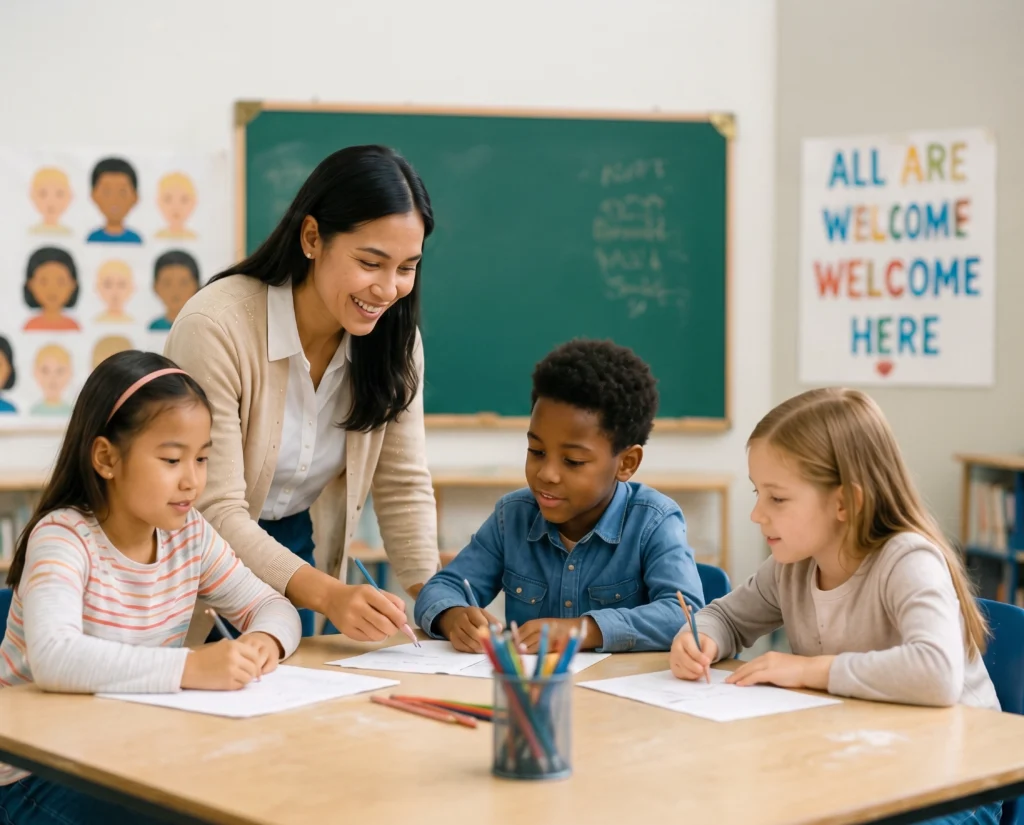
Today’s classrooms are more diverse than ever before.
Students walk into school carrying different languages, cultural backgrounds, traditions, family experiences, and perspectives. Because of this, teaching is no longer only about delivering academic content. It is also about creating environments where students feel respected, included, and genuinely seen.
For many international educators, teaching in the United States can feel both exciting and intimidating at the same time. Teachers often arrive with years of experience, strong professional backgrounds, and a deep commitment to students, yet they may still need time to adjust to unfamiliar cultural expectations both inside and outside the classroom.
Cultural responsiveness is not about having perfect knowledge of every culture or background. It is about being willing to listen, learn, and adapt.
Sometimes cultural responsiveness looks like understanding that communication styles between schools and families may differ depending on cultural expectations. Other times it means recognizing that students may express emotions, participation, or behavior differently based on their lived experiences.
The small moments often matter most. Learning how to pronounce a student’s name correctly. Taking time to understand family perspectives. Creating opportunities for students to feel represented in classroom materials and discussions. These simple actions help build trust and connection.
Interestingly, many international educators develop even deeper empathy because they personally experience what it feels like to be new in a different country. Adjusting to unfamiliar systems, accents, social expectations, and routines often increases awareness and compassion in ways that positively impact their relationships with students.
There is something deeply human about trying to build a new life while also supporting young people who may be navigating challenges and transitions of their own.
Schools that prioritize cultural responsiveness often become stronger communities overall. Students benefit from exposure to educators with different worldviews and experiences. Staff collaboration becomes richer. Families feel more welcomed and represented. Diversity becomes part of the school culture rather than simply a statement on paper.
At Educators Advocate Global LLC, we believe international educators contribute far more than professional qualifications alone. They bring stories, adaptability, resilience, global perspective, and lived experiences that positively shape classrooms and school communities.
We also believe schools play an important role in creating environments where educators from around the world feel welcomed, supported, and respected.
Successful recruitment is not only about placement. It is about helping people and communities grow together.